
In this article
- Do Chemical Labels Have to Be in German?
- Which Labeling Rules Apply in Germany?
- Why Germany Requires Extra Attention
- UFI Requirements for Hazardous Mixtures
- Common Labeling Mistakes Companies Make in Germany
- Selling Chemicals in Germany and Other EU Countries
- How Chemical Companies Simplify Compliance
- Germany Chemical Labeling Compliance Checklist
- Final Thoughts
- FAQ
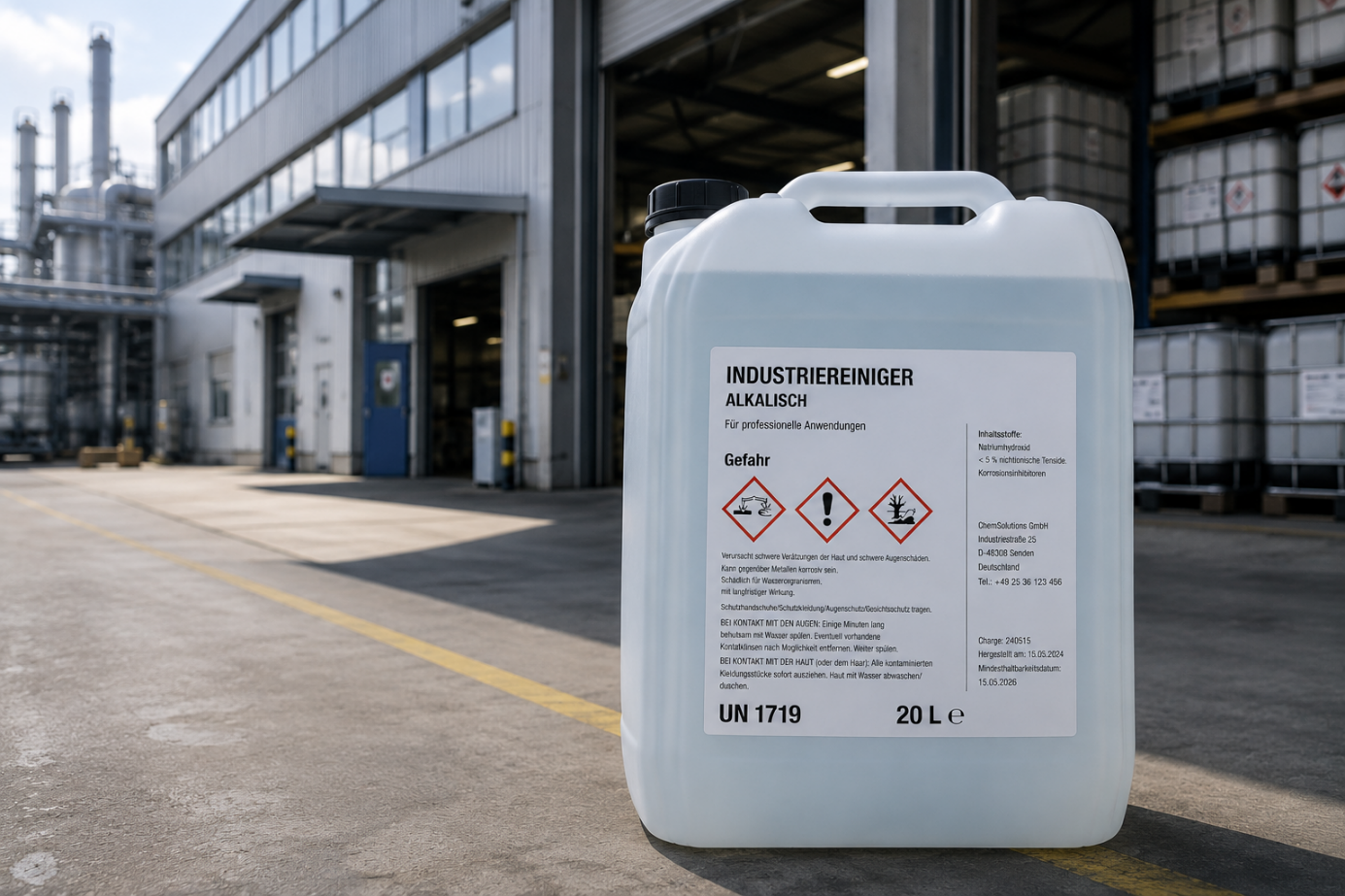 Chemical product labels prepared for the German market
Germany is the largest chemical market in Europe and one of the most attractive destinations for manufacturers, importers, and distributors of chemical products.
For many companies, entering Germany is the first step toward expanding across the European Union. However, selling chemicals in Germany requires more than simply complying with EU regulations. Businesses must ensure that their labels meet German language requirements, support CLP compliance, and provide accurate safety information for users.
Failure to do so can lead to regulatory issues, delays in market access, and costly relabeling projects.
This guide explains the key labeling requirements companies should understand before placing chemical products on the German market.
Do Chemical Labels Have to Be in German?
In most cases, yes.
Chemical products placed on the German market must generally provide CLP hazard information in German.
The CLP Regulation requires information relevant to health, safety, and environmental protection to be available in the language required by the Member State where the product is sold. For Germany, this means users must be able to understand hazard information without relying on translations or external documentation.
German-language requirements typically apply to:
- hazard statements (H-statements)
- precautionary statements (P-statements)
- signal words
- supplemental safety information
- other mandatory CLP label elements
For this reason, labels prepared only in English are generally not suitable for products intended for the German market.
Which Labeling Rules Apply in Germany?
Germany follows the EU Classification, Labeling and Packaging Regulation (CLP), which establishes a harmonized system for chemical labeling across all Member States.
Depending on the product classification, labels may need to include:
- hazard pictograms
- signal words
- hazard statements
- precautionary statements
- product identifiers
- supplier information
- nominal quantity where applicable
- a UFI code where required
Although these requirements are largely harmonized across Europe, businesses remain responsible for ensuring that their labels are accurate, up to date, and suitable for the German market.
Why Germany Requires Extra Attention
Many companies assume that a label compliant in one EU country will automatically be compliant in Germany.
In reality, Germany is often viewed as a compliance-sensitive market where accuracy and consistency matter.
The most common challenges include:
- maintaining accurate German translations
- keeping classifications up to date
- ensuring consistency across product variants
- managing multiple label versions
- updating labels after regulatory changes
Even relatively small translation errors can create compliance risks if safety information becomes unclear or misleading.
As a result, many chemical companies introduce additional quality checks before launching products in Germany.
UFI Requirements for Hazardous Mixtures
Many hazardous mixtures sold in Germany are subject to EU Poison Centre Notification (PCN) requirements.
Where applicable, companies may need to:
- create a Unique Formula Identifier (UFI)
- submit the required Poison Centre Notification
- display the UFI on the product label
The information provided through regulatory submissions should remain consistent with the information shown on product labels.
As product portfolios expand, managing this information manually becomes increasingly difficult, especially when products are sold in multiple countries.
Common Labeling Mistakes Companies Make in Germany
Using English-Only Labels
One of the most frequent mistakes is assuming that English-language labels can be used throughout Europe.
In Germany, mandatory safety information generally needs to be available in German.
Missing Label Updates
Regulatory requirements evolve regularly. Companies that fail to update labels after classification changes may unintentionally place non-compliant products on the market.
Inconsistent Product Information
Differences between product documentation, safety data sheets, notifications, and labels can create compliance problems during inspections.
Incorrect UFI Information
Where UFI requirements apply, missing or incorrect codes may result in regulatory issues and additional administrative work.
Selling Chemicals in Germany and Other EU Countries
Many businesses do not sell products exclusively in Germany.
A typical chemical supplier may distribute products across:
- Germany
- Austria
- France
- Belgium
- Netherlands
- Poland
This creates a significant labeling challenge because each market may have different language requirements.
Managing separate labels manually can quickly become inefficient, particularly for companies with large product portfolios.
A centralized labeling process makes it easier to maintain consistency while reducing compliance risks.
How Chemical Companies Simplify Compliance
As product ranges grow, spreadsheets and manual label creation often become difficult to maintain.
Many manufacturers use specialized chemical labeling software to:
- generate multilingual labels
- standardize label templates
- reduce manual work
- improve data consistency
- respond faster to regulatory changes
- support expansion into new markets
Solutions such as Valid Labels help chemical companies manage labeling requirements across multiple European countries from a single platform.
Germany Chemical Labeling Compliance Checklist
Before placing a product on the German market, verify that:
- required label information is available in German
- hazard classifications are current
- CLP pictograms are correct
- hazard and precautionary statements are complete
- supplier details are accurate
- UFI obligations have been assessed
- label content matches supporting documentation
- labels remain readable and easy to understand
Completing this review before launch can help reduce compliance risks and avoid costly corrections later.
Final Thoughts
Germany remains one of the most important markets for chemical companies operating in Europe.
While CLP provides a common regulatory framework across the EU, businesses selling chemicals in Germany must pay close attention to language requirements, labeling accuracy, and ongoing compliance obligations.
Solutions such as Valid Labels help chemical manufacturers and distributors create CLP-compliant labels, manage multilingual requirements, and maintain accurate product information across multiple markets from a single platform.
Companies that invest in efficient labeling processes are better positioned to reduce compliance risks, improve operational efficiency, and support long-term growth across Europe.
Looking to simplify chemical labeling and compliance management? Explore how Valid Labels can help streamline your labeling workflows and support your expansion across European markets.
FAQ
Do chemical labels need to be in German?
Generally, yes. Mandatory CLP hazard information should be available in German when products are placed on the German market.
Can I use English-only labels in Germany?
In most cases, English-only labels are not sufficient because users must be able to understand safety information in German.
Is a UFI code required in Germany?
For many hazardous mixtures covered by EU Poison Centre Notification requirements, yes. Companies should assess whether their products fall within the scope of the relevant obligations.
What is the most common labeling mistake in Germany?
Missing or inaccurate German translations are among the most common compliance issues.
How can companies manage labels for multiple EU countries?
Many manufacturers use specialized CLP labeling software, such as Valid Labels, to create multilingual labels and maintain consistency across markets.
Nikola Kopczyńska
Content Specialist, ValidLabels
Kasper Stasiak founded ValidLabels after working directly with European chemical exporters on CLP compliance workflows. ValidLabels is built by Awakast P.S.A., based in Wrocław, Poland.
Related articles
CLP Compliance
How to Launch a CLP-Regulated Product in a New EU Market
Expanding a chemical product into another EU country? Learn what to check before launch, from CLP labels and languages to UFI and poison centre notifications.
CLP Compliance
Multilingual CLP Labels: 5 Options for Selling Across Europe
Compare five ways to manage multilingual CLP labels across Europe, including single-language, multilingual, fold-out, overlay and print-on-demand labels.